Tracking the information about your manuscript
Communicate with the editorial office
Query manuscript payment status Edit officeCollecting, editing, reviewing and other affairs offices
Managing manuscripts
Managing author information and external review Expert Information Expert officeOnline Review
Online Communication with the Editorial Department
Download Center
Page Views
Information

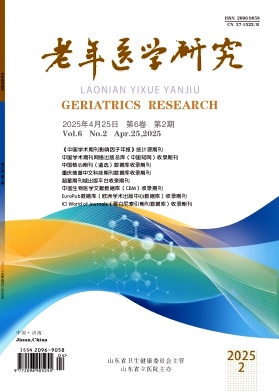
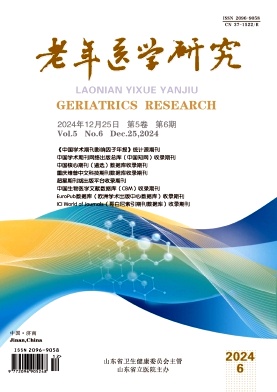
Geriatrics Research
CN: 37-1522/R
ISSN: 2096-9058
Governed by: Health Commission of Shandong Province
Sponsored by: Shandong Provincial Hospital Affiliated to Shandong First Medical University
Editor-in-Chief: SUN Zhijian
Deputy Editor-in-Chief: WANG Jianchun
Founded in 2020, bimonthly.
Indexed by: CNKI, Wanfang, Weipu, Chaoxing, CBM.
Factors associated with surgical difficulty and short-term outcomes in patients with locally advanced esophageal squamous cell carcinoma after neoadjuvant chemoimmunotherapy
XI Yang;DONG Wei;Objective To investigate the influencing factors associated with surgical difficulty and short-term outcomes in patients with locally advanced esophageal squamous cell carcinoma(ESCC) undergoing McKeown esophagectomy after neoadjuvant chemoimmunotherapy(nICT). Methods A retrospective analysis of eligible clinical cases was performed. All patients diagnosed with ESCC that underwent McKeown esophagectomy following nICT and had complete postoperative pathological data at Shandong Provincial Hospital Affiliated to Shandong First Medical University between July 2023 and October 2025 were consecutively enrolled. Patients with an operative time longer than the median(210 min) or conversion to thoracotomy were classified into the surgically challenging group, whereas the remaining patients were assigned to the ordinary group. Univariate and multivariate logistic regression analyses were performed to identify influencing factors associated with surgical challenge. Sensitivity analyses were conducted to assess the robustness of the main findings. Exploratory mediation analysis was used to evaluate whether dense peritumoral adhesions partially mediated the association between baseline tumor invasion depth and surgical difficulty. Propensity score matching(PSM; 1∶1) was applied to balance baseline characteristics before comparing short-term outcomes between the two groups. Results Among 174 included patients, 77 were classified into the surgically challenging group and 97 into the ordinary group. Compared with the ordinary group, the surgically challenging group had a higher body mass index(BMI)(P=0. 009). The distribution of clinical T stage differed significantly between the two groups(P=0. 020). Multivariate logistic regression analysis showed that BMI(OR=1. 226, 95% CI: 1. 080-1. 390, P=0. 002), dense abdominal adhesions(OR=4. 726, 95% CI: 1. 109-20. 145, P=0. 036), and vascular events(OR=5. 637, 95% CI: 1. 404-22. 636, P=0. 015) were influencing factors associated with surgical difficulty. Sensitivity analysis showed that, compared with patients with clinical T2 disease, those with clinical T4a disease had prolonged operative time(β=0. 149 4, 95% CI: 0. 008 2-0. 290 6, P=0. 038). Exploratory mediation analysis suggested that peritumoral adhesions might partially explain the association between clinical T stage and surgical complexity. Before and after propensity score matching, most postoperative complications were comparable between the two groups. However, postoperative pneumonia was more common in the surgically challenging group(23. 21% vs 8. 93%, P=0. 040). No 30-day or 90-day mortality was observed in either group. The pathological complete response rates in the surgically challenging group and the ordinary group were 27. 27%(21/77) and 36. 08%(35/97), respectively, and the major pathological response rates were 49. 35%(38/77) and 55. 67%(54/97), respectively, with no significant differences between the two groups. Conclusions Among patients with ESCC undergoing McKeown esophagectomy after nICT, higher BMI and deeper baseline tumor invasion may indicate increased surgical difficulty. Dense adhesions and vascular events may reflect increased intraoperative complexity. Increased surgical difficulty is mainly associated with a higher risk of postoperative pneumonia and prolonged hospital stay, without an observed increase in anastomotic leakage, severe complications, or short-term mortality within 30 and 90 days after surgery.
Relationship between glycated hemoglobin levels and acute exacerbation of bronchiectasis in elderly patients with concomitant diabetes mellitus
PENG Yafei;AO Suhua;YUAN Yulai;Objective To explore the relationship between glycated hemoglobin(HbA_1c) levels and the risk of acute exacerbation in elderly patients with bronchiectasis and diabetes mellitus(DM). Methods A retrospective collection was conducted for 167 elderly patients (≥65 years old) with bronchiectasis complicated with DM who were hospitalized at the Affiliated Traditional Chinese Medicine Hospital of Southwest Medical University from February 2023 to August 2025. According to the quartiles of HbA_1c, the patients were divided into four groups: group A(HbA_1c≤6. 53%, n=42), group B(6. 53%
Analysis of latent profiles of health literacy and influencing factors among migrant older adults
ZHENG Yafei;ZHAO Kedan;HU Xiaoxiao;ZHANG Qinghua;CHEN Ziying;LENG Chunyan;Objective To explore latent profile patterns of health literacy and its influencing factors among migrant older adults and to provide empirical evidence for developing precise, systematic health literacy promotion strategies. Methods A total of 3 055 migrant older adults with children in Jiangsu, Zhejiang and Shanghai were recruited via multistage random sampling between December 2022 and September 2023. General information questionnaire and the National Resident Health Literacy Monitoring Questionnaire were used to investigate the participants, and their health literacy levels in six dimensions including scientific health outlook, infectious disease prevention literacy, chronic disease prevention and control literacy, safety and first-aid literacy, basic medical literacy, and health information literacy were evaluated. Latent profile analysis(LPA) was adopted to classify participants into distinct latent profiles of health literacy. Univariate analysis and multinomial logistic regression models were applied to identify associated factors. Results Three distinct latent health literacy profiles were identified: the relatively favorable balanced profile(26. 5%,n=800), the health information deficit profile(49. 8%,n=1 503) and the overall low health literacy profile(23. 6%,n=713). Multinomial logistic regression indicated that participants with higher educational attainment, urban residence, migration for retirement or family reunion, prior occupations as farmers or workers, and better economic status had significantly higher odds of belonging to the relatively favorable balanced profile(all P<0. 05). Participants with interprovincial migration, longer migration duration, primary household income sourced from labor earnings or resident pension, poor sleep quality, resident medical insurance or New Rural Cooperative Medical Scheme coverage, and multiple chronic diseases had higher odds of belonging to the health information deficit profile or the overall low health literacy profile(all P<0. 05). Compared with the relatively favorable balanced profile, participants aged ≥80 years had higher odds of belonging to the overall low health literacy profile(P<0. 05). Compared with the health information deficit profile, participants with urban household registration had higher odds of belonging to the relatively favorable balanced profile(P<0. 05). Conclusions Obvious inter-group heterogeneity exists in health literacy levels among migrant older adults. Factors including age, education attainment, household registration type, residence type, migration range, migration motives, migration duration, willingness to stay, previous occupation, primary income source, economic level, sleep quality, medical insurance type, and number of chronic diseases all predict their latent health literacy profiles.
Meta-analysis of the impact of indoor air pollution on cognitive impairment in middle-aged and older adults
WANG Siqi;TANG Ruihan;WU Ruiting;SHI Beibei;Objective To systematically evaluate the impact of indoor air pollution on the risk of cognitive impairment in middle-aged and older adults. Methods A comprehensive literature search was conducted in Chinese and English databases, including CNKI, Wanfang Data, VIP, CBM, PubMed, Web of Science, Embase, and Cochrane Library, to identify observational studies exploring the association between indoor air pollution and cognitive function in middleaged and older adults(aged ≥50 years). The search timeframe was from database inception to March 2026. Literature screening, data extraction, and quality assessment were performed independently by two researchers. Meta-analysis was conducted using RevMan 5. 4 and Stata 18. 0 software. Results A total of 13 observational studies were ultimately included. Meta-analysis results showed that second-hand smoke exposure(OR=1. 46,95% CI:1. 21-1. 78,P<0. 001) and indoor solid-fuel use(OR=1. 29,95% CI:1. 16-1. 45,P<0. 001) increased the risk of incident cognitive impairment in middle-aged and older adults. Conclusion Both household second-hand smoke exposure and indoor solid-fuel use significantly increase the risk of incident cognitive impairment in middle-aged and older adults.
Research progress on influencing factors and nursing interventions of cognitive frailty in elderly patients with heart failure
HUAI Xi;SHI Han;WANG Yu;Heart failure is a common chronic condition among elderly adults, and cognitive frailty is highly prevalent in this population and closely associated with adverse health outcomes. Cognitive frailty, defined as the coexistence of physical frailty and cognitive impairment, is influenced by multiple interrelated factors. This review summarizes the major influencing factors and nursing interventions for cognitive frailty in elderly patients with heart failure. Specifically, it examines the associated risks from three dimensions, including demographic and socioeconomic characteristics, physical disease and health status indicators, as well as psychological conditions and lifestyle behaviors. In addition, core nursing practice points are summarized covering individualized nutritional intervention, exercise rehabilitation combined with sleep collaborative intervention, integrated cognitive and psychological intervention, dual-task training and multidomain comprehensive interventions. This review aims to provide a reference for risk identification, nursing assessment, and clinical management of cognitive frailty in elderly patients with heart failure.